IPAM
 Last Friday, I attended Dr. Vwani P. Roychowdhury's lecture regarding NLP, or Natural Language Processing.
 Another important action, his program performed was the vast clustering of related information. When his program was fed blogs and other websites contain petabytes of data(over billions of words and text), all pertaining to a certain topic, the program was able to organize information and correlate an important information in clusters. Clusters are a visual representation of information that indicate the size and correlation of many types of data. Therfore, in many respects the design of such a program, allows for computers, in a sense, to critically analyse a topic.
Initially, when pondering how to connect such a dense topic to the material learned in class, I faced difficulty.
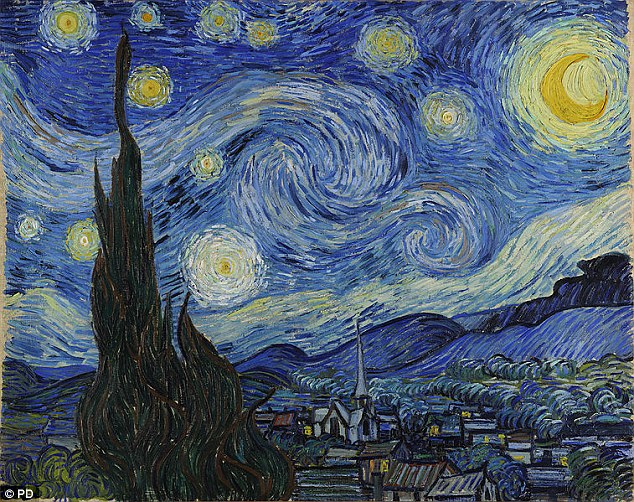
However, it is clear to me now, that such a topic in fact, requires great artwork. For example, much of the commands to organize clusters of information requires an artistic mind to organize such information in a visually pleasing manner.

Furthermore, in order to create commands for a computer to both efficiently and methodically carry out, great thought must be taken into consideration before doing. Just as a painter exerts creative thought onto his canvas, so too does a developer using his NLP algorithms. Additionally, much of the same mental faculties required in producing artwork, goes into developing code as many skilled programmers have noted.
Works Cited
"Big Data and Complex Networks Group." Big Data and Complex Networks Group. UCLA. Web. 30 May 2016.
Duygulu, P., and K. Barnard. "Clustering Art." Clustering Art. IEEE Xplore. Web.
Guyon, Isabelle. "Clustering: Science or Art." Stanford University. Web.
Moore, Barbara. "Art 1 and Pattern Clustering." MIT. Web.
Rijmenam, Mark Van. "Datafloq - Connecting Data and People." Datafloq Read RSS. Datafloq. Web. 30 May 2016.